
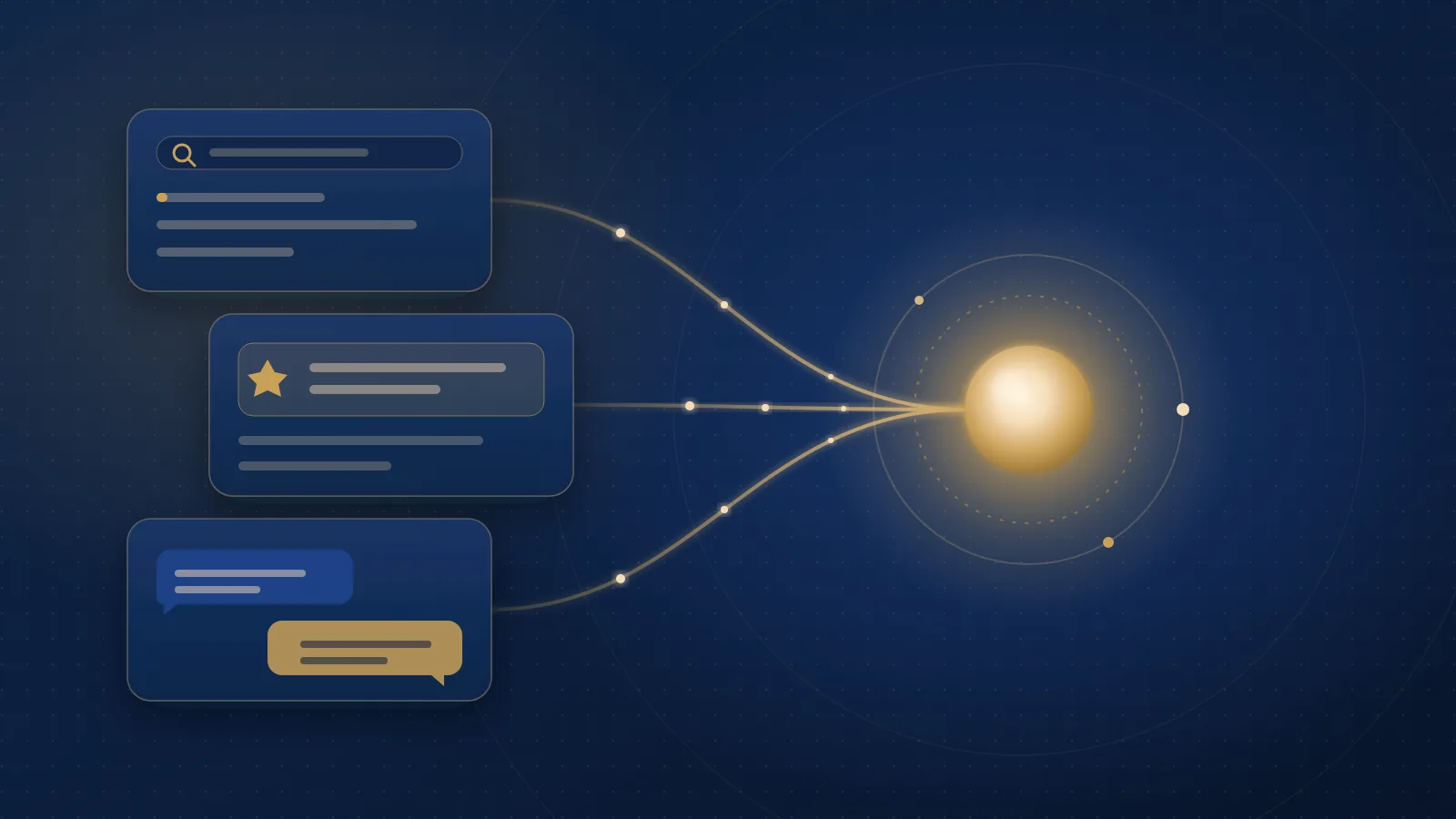
SEO earns rankings in classic Google results. AEO makes your pages easy to quote in AI Overviews and snippets. GEO earns mentions inside ChatGPT, Perplexity and Gemini answers. For Singapore SMEs the three overlap heavily, so run them as one visibility programme: answer-first pages, clear entities and third-party proof that AI systems can trust.
Why the distinction matters in Singapore
Singapore is a small, high-intent market. Buyers ask category questions in plain language: “best sunscreen for humid weather”, “halal caterer for a CBD office lunch”, “PDPA-ready CRM for a small shop”. More of those questions now get answered inside Google AI Overviews, AI Mode, ChatGPT, Perplexity or Gemini before anyone clicks a link.
AI tools are already mainstream here. More than a third of Singaporeans use ChatGPT each month, according to >We Are Social and Meltwater’s Digital 2026 Singapore report (2025). If a competitor owns the clear answers and the third-party mentions in your category, you can hold decent rankings and still be left off the shortlist that forms inside an AI conversation.
Local agency trend reports now treat AEO and GEO as budget lines rather than side projects (>MediaPlus, 2026; >Best Marketing Singapore, 2026). The useful question is not which acronym to buy. It is how to organise one piece of work so all three benefit.
SEO, AEO and GEO in plain English
| What it targets | What good looks like | |
|---|---|---|
| SEO (search engine optimisation) | Rankings and clicks in classic search results | Crawlable, fast, useful pages that match what people search for |
| AEO (answer engine optimisation) | Being quoted as the direct answer in AI Overviews and snippets | A clear answer near the top, question-shaped headings, tidy FAQs |
| GEO (generative engine optimisation) | Being cited or recommended inside ChatGPT, Perplexity, Gemini and similar tools | Consistent brand facts, original insight and mentions on trusted third-party sites |
The overlap is large. Google’s own guide to generative AI features in Search, published in May 2026, says SEO best practices remain relevant because AI Overviews and AI Mode are rooted in Google’s core ranking and quality systems. It adds that, from Google Search’s point of view, work aimed at AI search is still SEO (>Google Search Central, 2026; >Google Search Central Blog, May 2026).
GEO still adds something. Independent tools such as ChatGPT and Perplexity build answers from many sources, and reputation on other people’s sites matters as much as your own pages. >WRITER’s 2026 guide, summarising research from AirOps and Muck Rack, reports that most brand mentions in AI answers come from third-party pages such as reviews, trade press and earned media, not from brand-owned sites.
What has actually changed in search
In February 2024, >Gartner predicted that traditional search engine volume would drop 25% by 2026 as AI chatbots and virtual agents took over queries. Now that the forecast year has arrived, the picture is more nuanced.
- Demand has moved, not vanished. A 2026 >Fractl and Search Engine Land study of about one million high-volume keywords (Semrush data to April 2026) found 29% of search volume in decline, but growing keywords offset it, leaving total demand roughly flat. Comparison queries such as “X vs Y” were declining fastest.
- The click is what is shrinking. >Ahrefs (2026) compared 300,000 keywords between December 2023 and December 2025 and found that when an AI Overview appears, the top-ranking page gets a click-through rate about 58% lower than expected.
For the year ahead, plan for this: people keep searching, but more informational and comparison questions end with an AI summary. Being the source that summary names matters more than ever, and pages that only define a term are the easiest to replace.
What Google says you do not need
Google’s May 2026 guide includes a mythbusting section that saves SMEs time and money (>Google Search Central, 2026). For Google Search you do not need:
- llms.txt files or other special AI markup
- special schema.org markup for AI Overviews (structured data still helps with rich results)
- content chopped into tiny “chunks” for AI
- rewrites stuffed with every long-tail variation of a query
- inauthentic mentions planted across the web
One related change: Google stopped showing FAQ rich results in Search on 7 May 2026 (>Search Engine Roundtable, 2026). Keep FAQ sections because readers and answer engines use them, but do not expect FAQ markup to win extra space in results.
Google also points site owners to the Generative AI performance report in Search Console to see how content performs in AI features. Start there before paying for a third-party dashboard.
A 90-day visibility plan for Singapore SMEs
Weeks 1 to 2: baseline before you buy tools
Write 10 to 15 real buyer prompts in Singapore English, plus Mandarin or Malay if that is how your customers ask. Run them in ChatGPT, Perplexity, Gemini and Google AI Mode, and log whether you are named, misdescribed or missing. Add a “How did you hear about us?” field to forms and watch branded search. Repeat the prompt log monthly. For the full method, see our guide to measuring AI visibility.
Weeks 3 to 6: rewrite your top informational pages answer-first
Pick the pages that used to bring the most informational traffic. Open each with a 40 to 60 word answer, then add proof, process and Singapore-specific detail. Use question-shaped headings and a short FAQ. Make the entity facts unmistakable: brand name, what you sell, who you serve and where.
Weeks 4 to 10: publish things nobody else can
Google’s guide asks for “non-commodity” content: first-hand experience, original data and a real point of view. The academic research agrees. The >Princeton-led GEO study (Aggarwal et al., KDD 2024) found that adding citations, quotations and statistics could raise a source’s visibility in generative answers by up to 40%, while keyword stuffing did little or nothing. One local comparison, a price-and-ingredient guide or a before-and-after from your own work beats five generic definitions.
Weeks 6 to 12: build genuine third-party proof
Ask happy customers for Google and marketplace reviews, brief micro-creators who already use your product, and pitch two stories to trade or lifestyle media. Keep your name, address and category consistent everywhere. Earn mentions; do not manufacture them.
Throughout: connect visibility to capture
If fewer people click, the ones who do must have an easy next step. Put a clear call to action above the fold and offer a WhatsApp opt-in path (see our guide to WhatsApp marketing in Singapore). Repurpose each answer page into short vertical clips so the same explanation can be found on TikTok, Reels and Shorts (short-form video SEO).
At Brands Win Agency we treat search, content and paid media as one system rather than three vendors, and you can see how the pieces fit on our services page.
What to stop doing
- Publishing thin definition posts that any AI can paraphrase without naming you
- Buying “GEO plugins” while ignoring reviews and press
- Judging success only on non-branded informational sessions
- Letting SEO, content and PR work from different descriptions of your brand
FAQ
What is the difference between SEO, AEO and GEO?
SEO targets rankings and clicks in classic search results. AEO targets being quoted as the direct answer in AI Overviews and snippets. GEO targets being cited or recommended inside tools such as ChatGPT, Perplexity and Gemini. In practice they share the same foundations: useful pages, clear answers, consistent brand facts and trusted third-party mentions.
Is SEO still worth it for Singapore businesses?
Yes. Google’s May 2026 guide says SEO best practices remain relevant because its AI features rely on core Search ranking and quality systems. Crawlable, fast, useful pages are still what AI Overviews draw from. What changes is the aim: be the page an AI summary names, not only the page that ranks.
Do I need special schema for Google AI Overviews?
No. Google says structured data is not required for its generative AI features and there is no special markup to add. Structured data can still support rich results. Google also stopped showing FAQ rich results in May 2026, so keep FAQs for readers rather than for extra search space.
How can an SME measure AI visibility without expensive tools?
Run a fixed set of buyer prompts each month across ChatGPT, Perplexity, Gemini and Google AI Mode, and record whether you are named. Check Search Console’s Generative AI performance report, watch branded search and ask new customers how they found you. That is enough to set priorities. For the full method, see our guide to measuring AI visibility.
What should we fix first: our blog or our reviews?
Both, in parallel. Answer-first pages give AI systems accurate language to quote. Reviews, press and creator mentions give them reasons to trust and recommend you. A common SME mistake is months of on-page edits with no new reviews or coverage. Fix your top pages and start a review routine in the same month.
Did Gartner’s 25% search decline prediction come true?
Not in the way it was framed. Gartner forecast in 2024 that traditional search volume would fall 25% by 2026. A 2026 Fractl and Search Engine Land study found total demand roughly flat, while Ahrefs found far fewer clicks when AI Overviews appear. People still search; fewer of them click.